Abdo's manager, on the record: the fire levy line is wrong and our invoices were coded to the wrong department.
The firm the city pays to keep its books presented a 2027 budget draft on July 14, 2026. Its own manager told the council the fire levy line was wrong and that the firm's invoices had been coded to the wrong department. The draft opened at 19.5 percent.
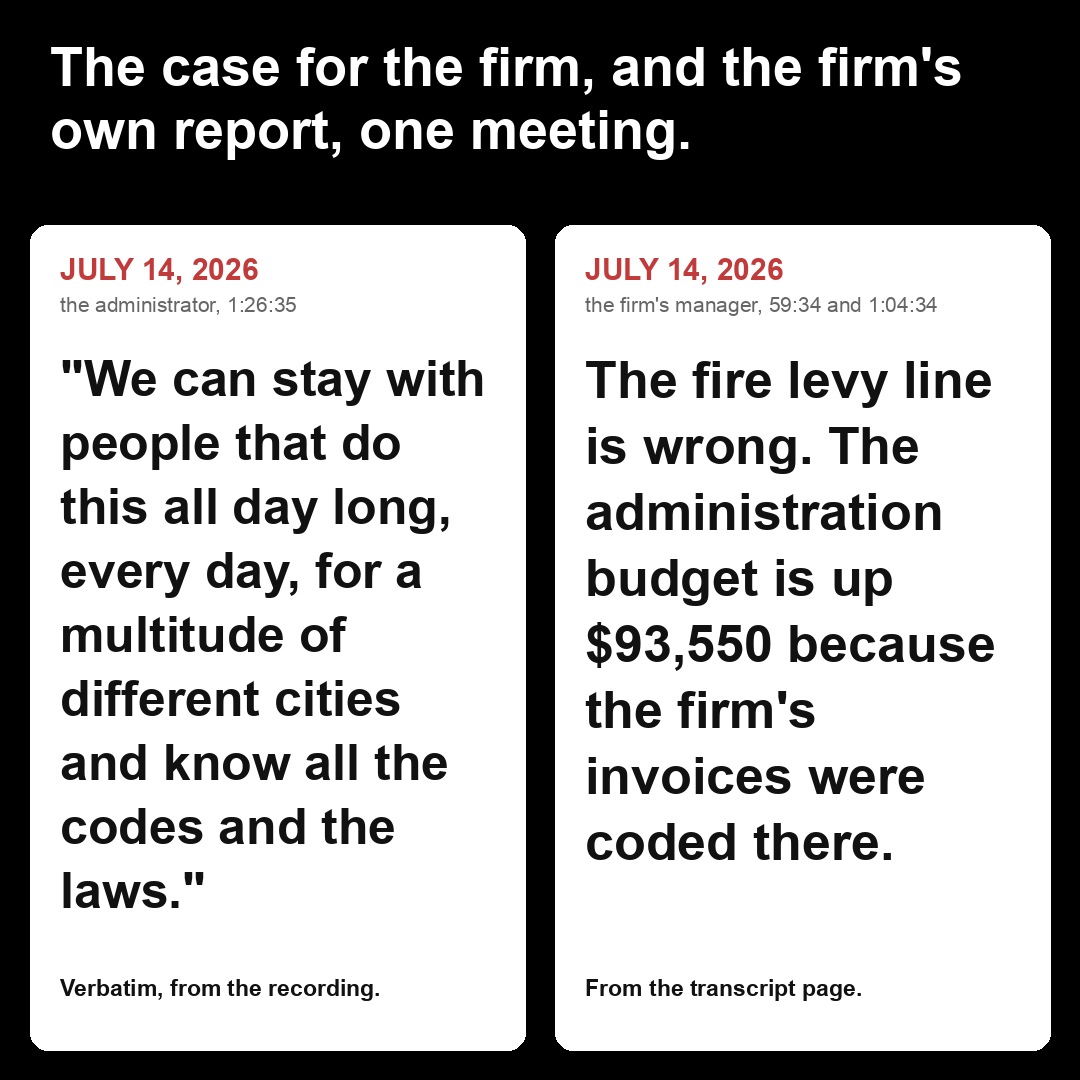
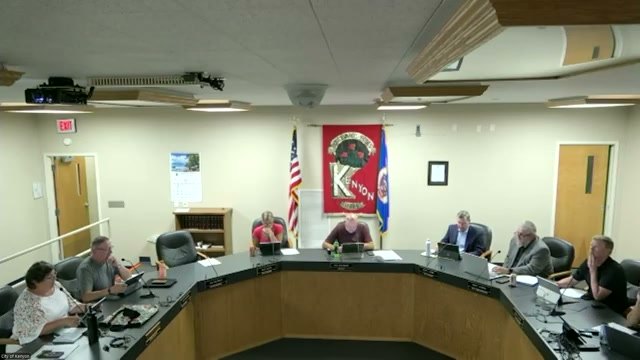
Since September 2025 Kenyon's accounting, human resources and budget preparation have been contracted to Abdo, an accounting firm in Mankato. The council chose the firm over hiring a finance director, and the administrator's stated reason on July 14, 2026 was the depth of "people that do this all day long, every day, for a multitude of different cities and know all the codes and the laws" 1:26:35. That evening the firm's manager, Jessi Sturtz, presented the first draft of the 2027 budget. What she said about it is on the recording.
The first look
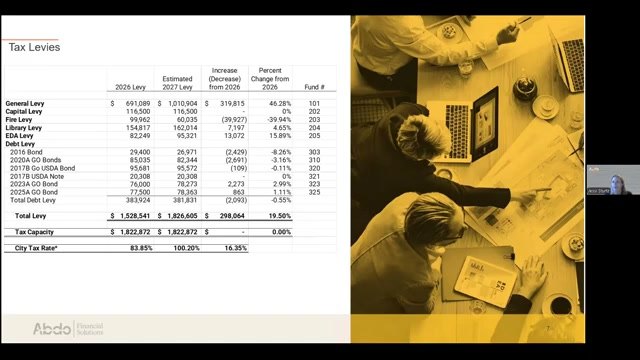
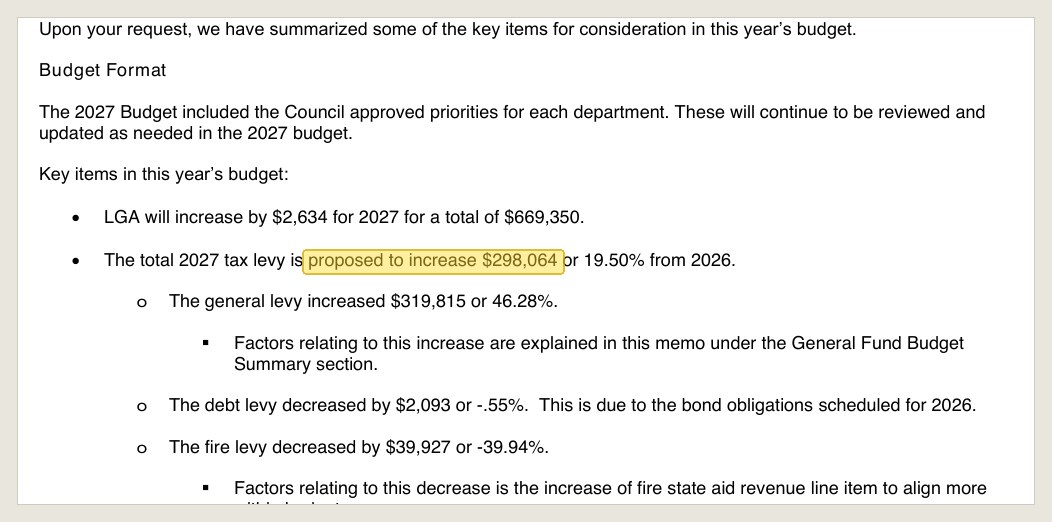
Sturtz opened at 56:42. On June 16 she, City Administrator Scott Lehner and a colleague had met with every department head, and the draft included everything requested so the council could decide what to cut before the preliminary levy was certified September 8. The total came to $1,826,605, a 19.5 percent increase over 2026 that would have moved the city tax rate from 83.85 to 100.20 percent of tax capacity.
Three minutes later she flagged the first problem.
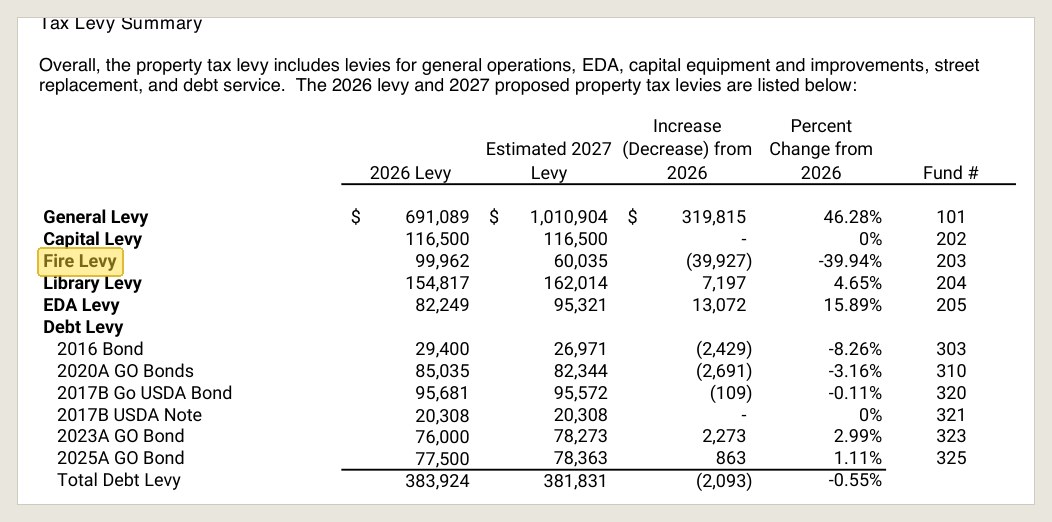
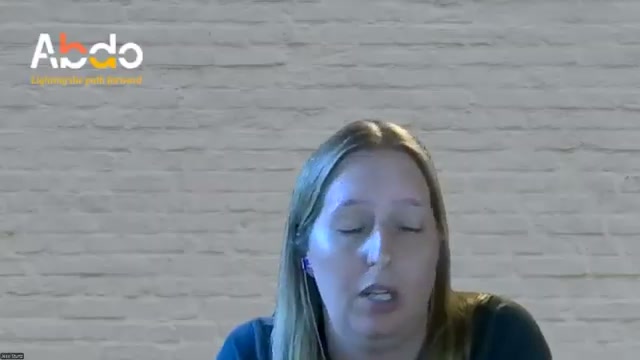
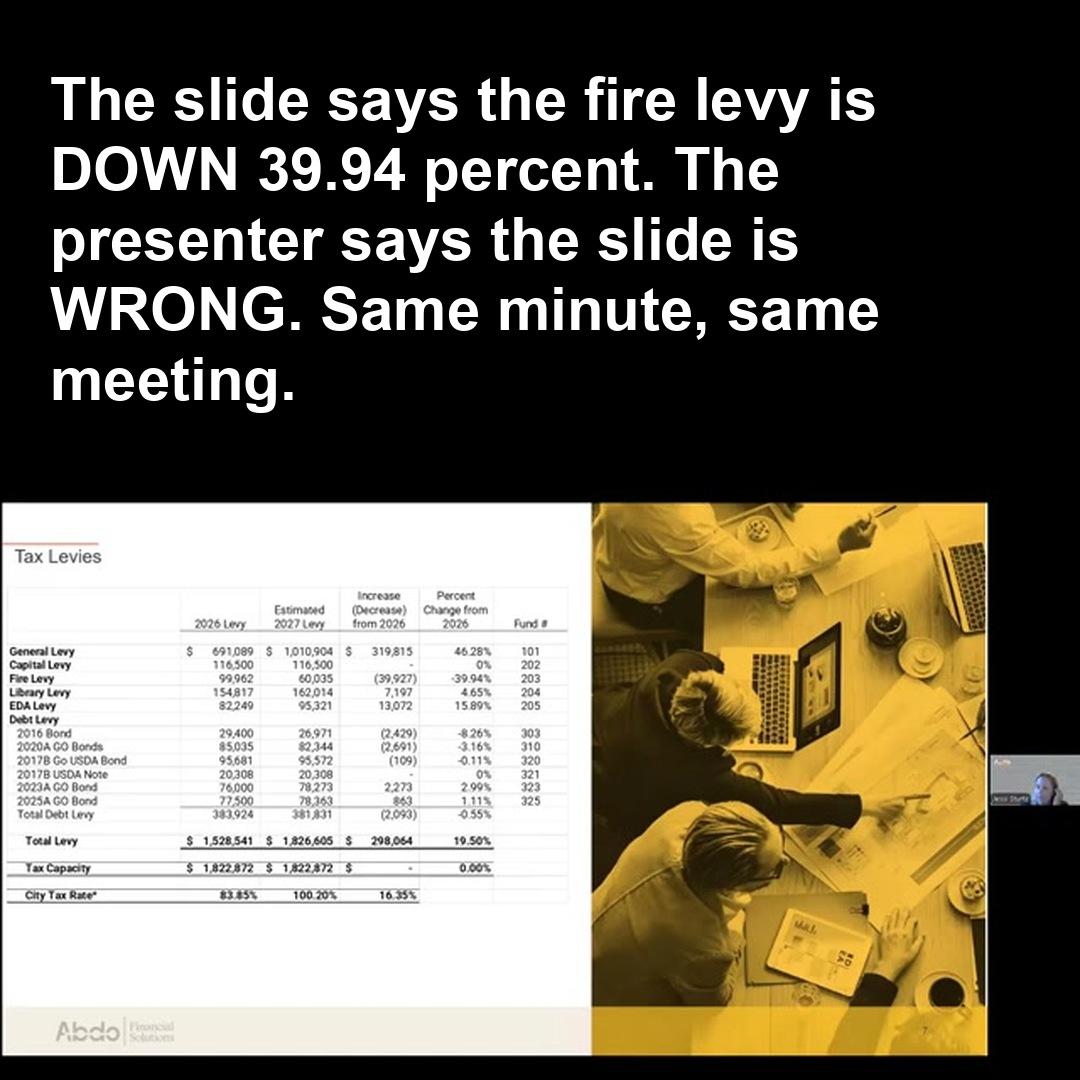
Sturtz flagged that the fire levy line is wrong. The fire state aid entry needs correction and the fire levy will show an increase, not a decrease, in the next draft.Transcript page, July 14, 2026, 59:34.
The July draft showed the fire levy at $60,035 against $99,962 in 2026, a cut of forty percent that did not exist. The August draft restored it to $98,613. A council reading the July page would have seen the fire department losing a third of its levy and the general levy rising 46 percent; neither was true in the way the page presented it.
The invoices
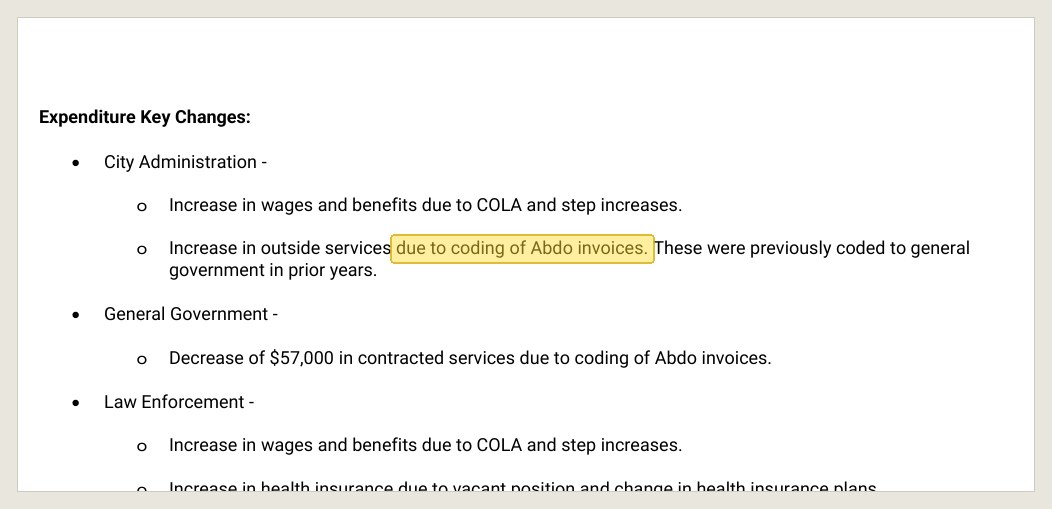
At 1:04:34 Sturtz explained why the administration budget had risen $93,550. The main reason was that Abdo's own invoices had been coded to administration rather than to general government, where they had been budgeted. The FY2025 audit shows the same thing from the other side: city administration ran $472,841 against a $386,060 budget, an overrun of 22 percent that the finance consultant attributed to her firm's billing being coded there. On August 6 she told the council the same shift in the other direction, administration up about $78,854 "mostly because Abdo billing moved from general government, which drops about $57,000" 43:51.
Coding a vendor's own invoices to the wrong department is not a rounding error. It moves the largest contracted cost in the general fund from one line to another, and it means the budget the council compared against last year was not comparing like with like.
We can stay with people that do this all day long, every day, for a multitude of different cities and know all the codes and the laws.Scott Lehner, July 14, 2026, 1:26:35, source
The detail that was not there
When council member Deanna Gard asked for a breakdown of the contracted-services and outside-services lines across departments, Sturtz said contracted services were mainly Abdo and outside services mainly CEDA, and that staff would pull the general ledger detail 1:17:56. At 1:23:01 she confirmed she did not have that detail in front of her. Gard asked for it "more broken down" 1:23:24. Neither the August 6 nor the September 8 packet contains the vendor-by-vendor breakdown.
Sturtz also told the council that small cities typically set preliminary levies around 8 or 9 percent and work down to 2 to 5 percent by December 1:15:07. Kenyon's draft started at more than twice that. Mayor Don Kirchmann said he was not happy with a 19 percent levy and wanted it understood as a working draft 1:07:48. By August 6, after cuts to pool capital, street maintenance and police items, the draft stood at $1,686,549, up 10.34 percent, still above the council's target of 9.
The firm's memo on the tax rate used 83.85 percent; the county's certified figure was 84.68. The first audited year with Abdo keeping the books found three material weaknesses. The case for the firm rests on expertise. The recording of the firm presenting its own draft is the evidence the council has of what that expertise produced.
Decrease of $57,000 in contracted services due to coding of Abdo invoices.Abdo budget memo, Aug. 6, 2026 packet, source
Before and after
- Sept. 1, 2025Abdo's contract for finance, HR and budget preparation begins.
- June 16, 2026Sturtz, the administrator and a colleague meet every department head to build the 2027 draft.
- July 14, 2026First draft presented: levy up 19.5 percent; Sturtz says the fire levy line is wrong and the firm's invoices were miscoded.
- Aug. 6, 2026Second draft: levy up 10.34 percent, fire levy restored to $98,613, "Decrease of $57,000 in contracted services due to coding of Abdo invoices."
- Sept. 8, 2026The preliminary levy is certified; the FY2025 audit is presented the same night.
What the statute says
The council shall have full authority over the financial affairs of the city, and shall provide for the collection of all revenues and other assets, the auditing and settlement of accounts, and the safekeeping and disbursement of public money.
The numbers are the council's responsibility by statute, not the administrator's and not a vendor's.
People in this story
- Jessi SturtzManager of Abdo's team for Kenyon, presenting by Zoom
- Scott LehnerCity administrator since December 2024
- Deanna GardCouncil member, appointed April 14, 2026
- Don KirchmannMayor since January 2025
Sources
- City of Kenyon recording, July 14, 2026, at 56:42, 59:34, 1:04:34, 1:07:48, 1:15:07, 1:17:56, 1:23:01, 1:23:24, 1:26:35; meeting page.
- City of Kenyon recording, August 6, 2026, at 43:51; meeting page.
- Levy tables and the FY2025 general fund figures: the open letter and the packets of July 14 and August 6, 2026.
More from the record
Lehner called it "a wash" before anyone pulled the ledger. The ledger disagreed.
Two months after the council approved the TIF, staff told the developer the number doesn't hold up.
The city's own advisor said $800,000. The council gave the developer $1,855,000 and asked questions later.
All 27, in order · The open letter · Every packet and recording