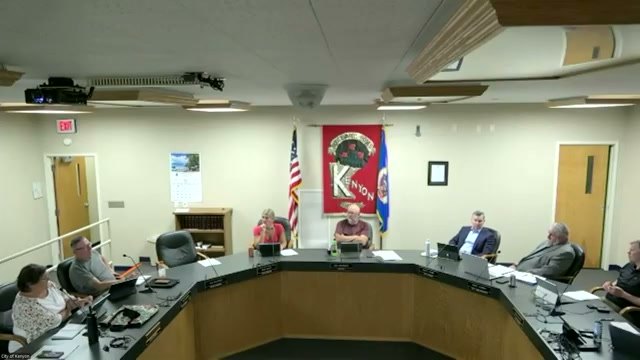
The breakdown Lehner promised in July never showed up. The first audit with Abdo on the books found three material weaknesses.
On July 14, 2026 a council member asked for a vendor-by-vendor breakdown of contracted services and the administrator said it was coming. It was not in the August packet or the September one. What the September packet did carry was the first audit of a year with the outside firm keeping the books: three material weaknesses.
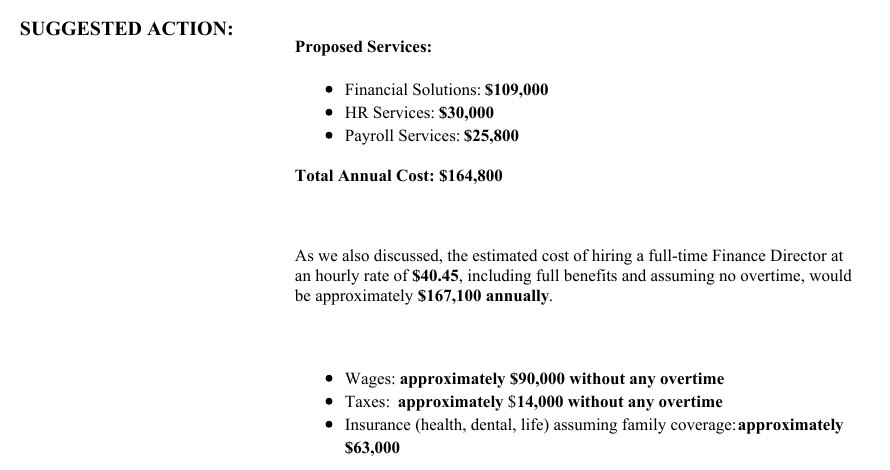
In August the in-house finance director cost $130,000. By September, with no one hired, it cost $167,100.
In August 2025 the administrator told the Kenyon Leader a full-time finance director would cost about $130,000. The staff report of September 8, 2026 puts the same job at $167,100. Nobody was hired in between, and the wage line on the page does not match the city's own posted rate.
KMU offered to lend for housing lots. Twice. The EDA president said there was no money. Two years gone, eight lots left.
Kenyon Municipal Utilities holds more than ten million dollars and twice said yes, unanimously, to lending the city money for housing lots. The EDA president said there was no money. Two years later the town has about eight lots for sale and the parcel is still unbought.
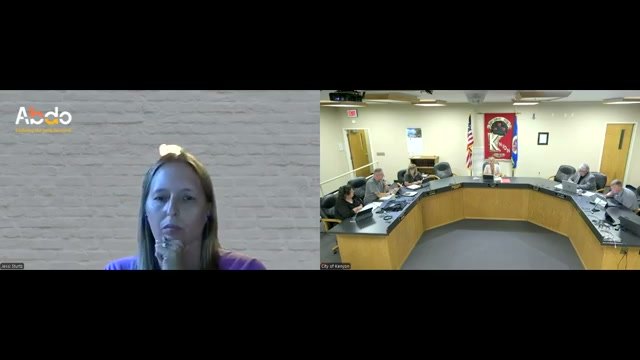
"We don't know what you're doing." Said by the council member who sits on the EDA.
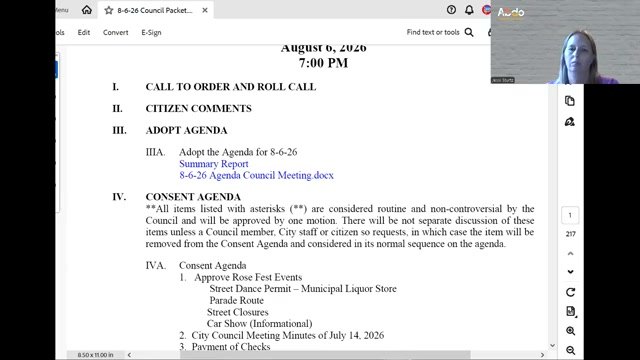
On August 6, 2026 the acting mayor, who also sits on the city's Economic Development Authority, told the administrator that the council is "just kind of trusting that you know what you're doing and we don't know what you're doing." It is the plainest description of Kenyon's oversight on the record.
A council member asked what a contract costs. Lehner said that's a closed meeting. The statute says it isn't.
On August 6, 2026 a council member asked to examine the cost of the city's economic development contract before the levy was set. The administrator said that would be "a performance discussion" for a closed meeting. The Open Meeting Law says a body may close for an evaluation, not that it must, and the cost of a contract is public business.
Two months after the council approved the TIF, staff told the developer the number doesn't hold up.
On May 18, 2026 the council approved a $1,855,000 tax increment request that its own advisor had put at $800,000. On July 14 the city attorney reported that he, the administrator and the advisor had told the developer the number "exceeds what the qualified costs and projected increment support."
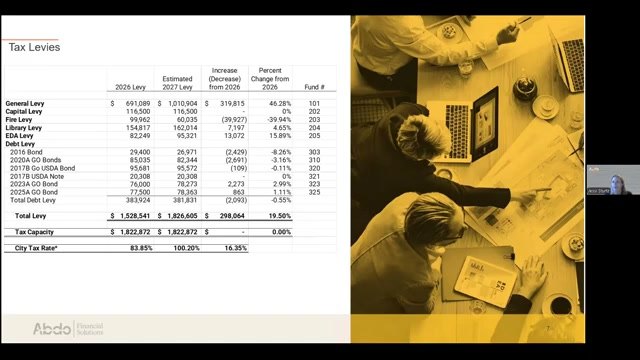
Abdo's manager, on the record: the fire levy line is wrong and our invoices were coded to the wrong department.
The firm the city pays to keep its books presented a 2027 budget draft on July 14, 2026. Its own manager told the council the fire levy line was wrong and that the firm's invoices had been coded to the wrong department. The draft opened at 19.5 percent.
Lehner called it "a wash" before anyone pulled the ledger. The ledger disagreed.
In August 2025 the city administrator said the outside accounting firm would cost about $200,000 and an in-house finance director about $130,000. On July 14, 2026 he told the council the two were "pretty much a wash." The ledger had not been pulled.
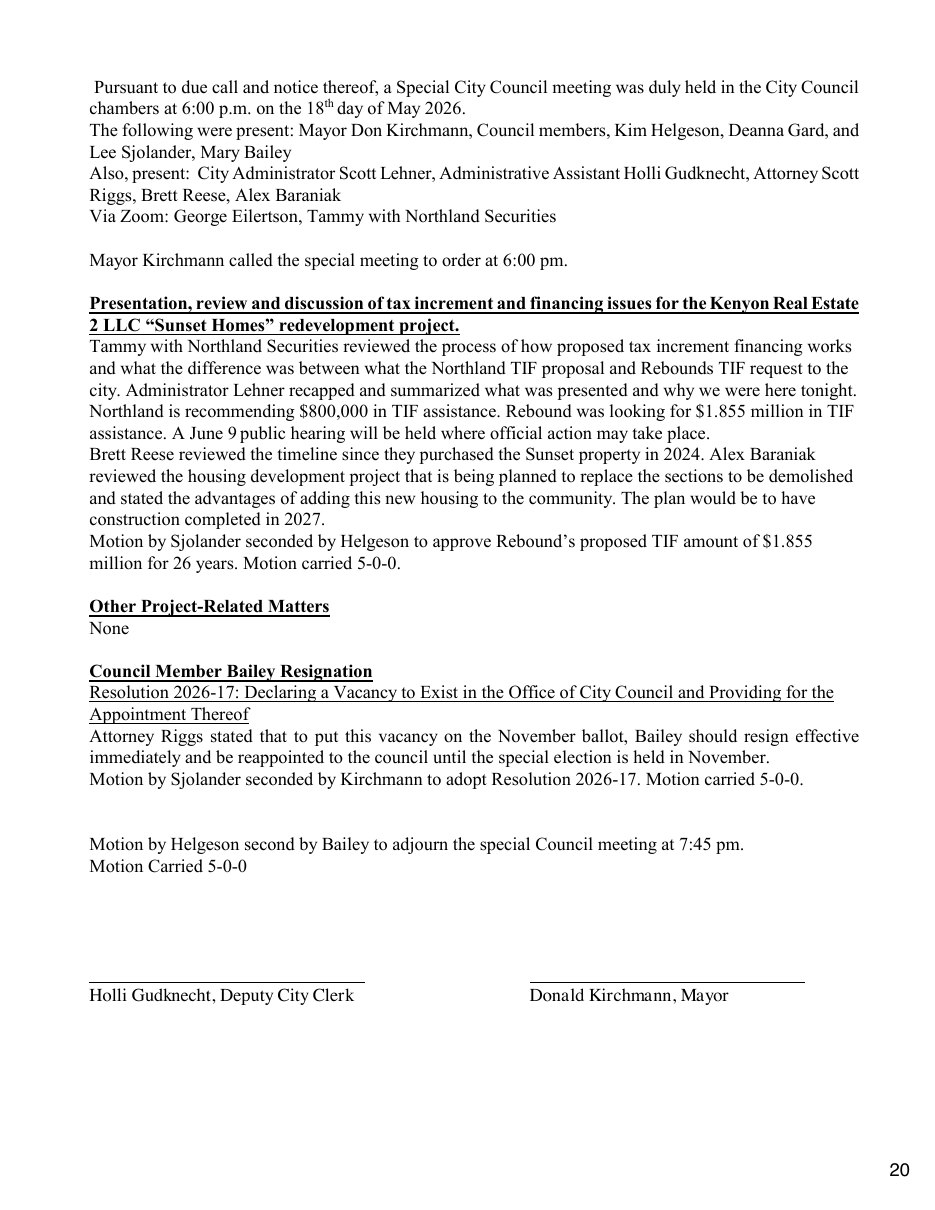
The city's own advisor said $800,000. The council gave the developer $1,855,000 and asked questions later.
The city's own financial advisor put the Sunset Home apartments' tax increment at $800,000. The developer asked for $1,855,000. On May 18, 2026 the council gave the developer's number, 5-0, and the underwriting came afterward.
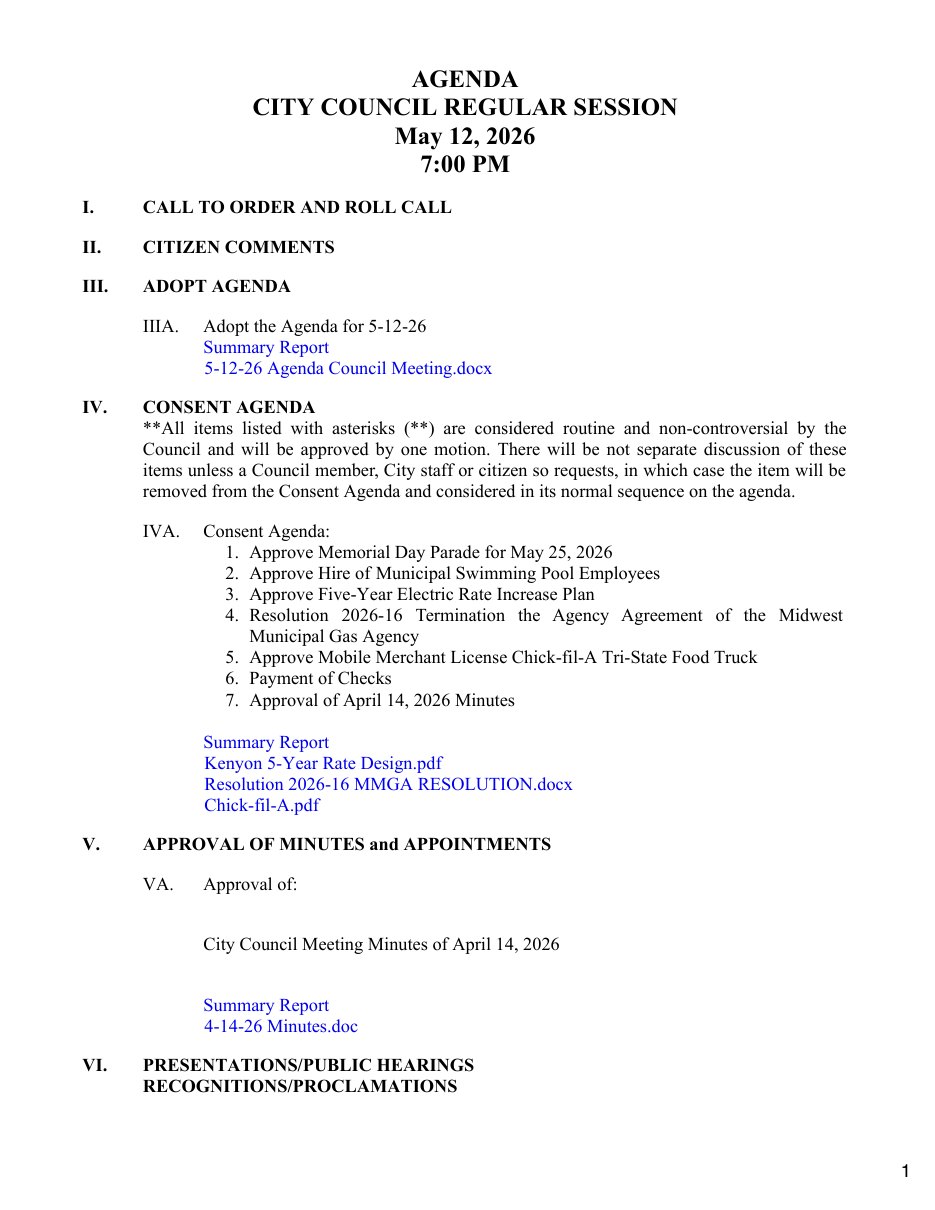
Your electric bill rises 27.6 percent over five years. It passed on consent, no discussion, and no minutes are posted.
A five-year electric rate plan, 7.5 percent in year one and 5 percent a year after that across all customers, went to the council on May 12, 2026 as item three of a seven-item consent agenda, between the pool hires and a food-truck license. The published record of the meeting is the agenda and the packet.
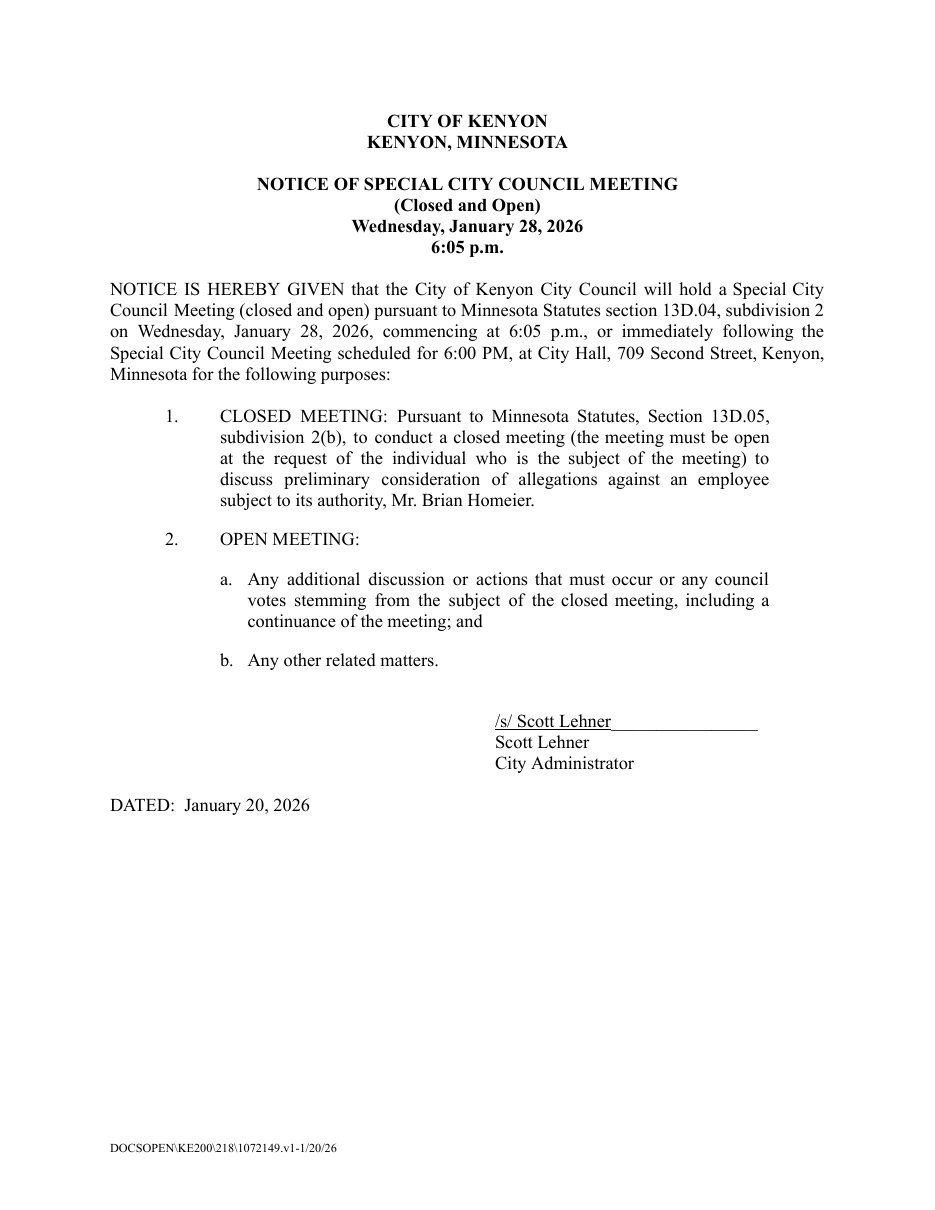
Lehner noticed a closed meeting. The city attorney opened it back up: there was nothing to close.
The administrator signed a notice for a closed special meeting on January 28, 2026, to consider allegations against a police officer. When the council convened, the city attorney said no closed session was necessary. The officer had already resigned. The whole thing took nineteen minutes, in the open.
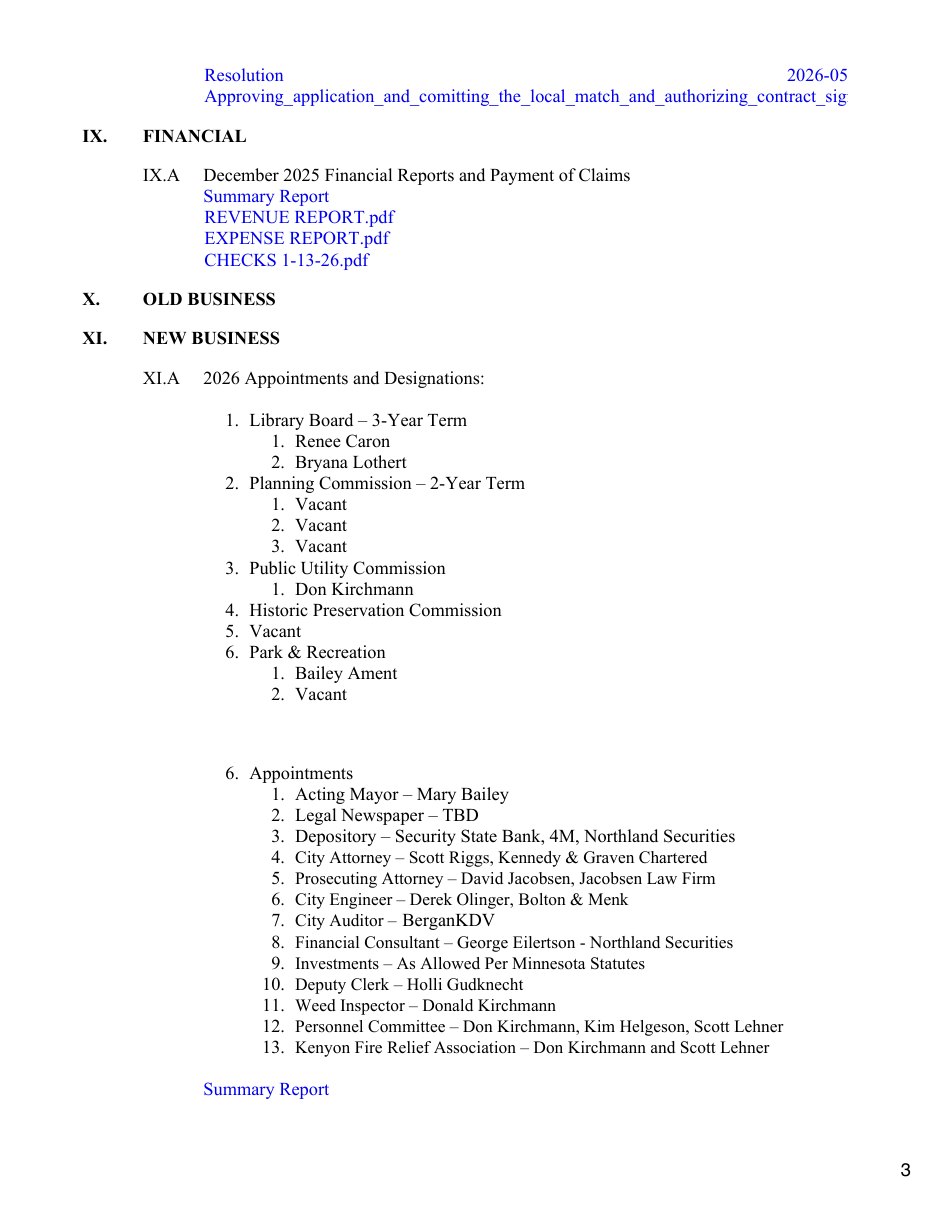
The Messenger has an office in Kenyon and asked for the legal-notice contract. The council gave it to the Leader without a word.
In November 2025 the publisher of the Kenyon-Wanamingo Messenger asked the council to make his paper the city's legal newspaper for 2026. The statute the city attorney attached to the January packet gives priority to a qualified paper with its office in town. The council appointed the Kenyon Leader. The minutes record no discussion.
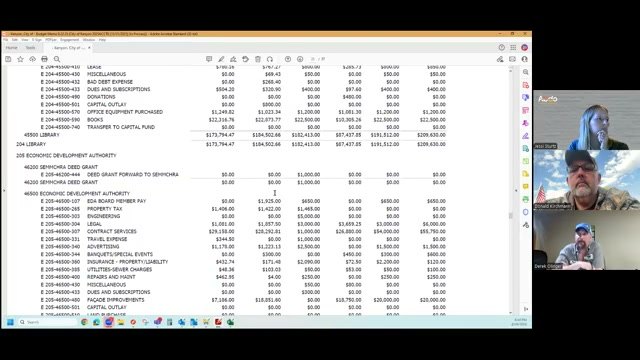
Somebody forgot to levy $57,000 in bond payments. Kenyon found out eight months late, from the vendor.
The 2025 budget left out $57,000 in payments on bonds the city had already issued. Nobody in city hall caught it. The outside firm hired to clean up the books found it in August 2025 and proposed paying it back over three years.
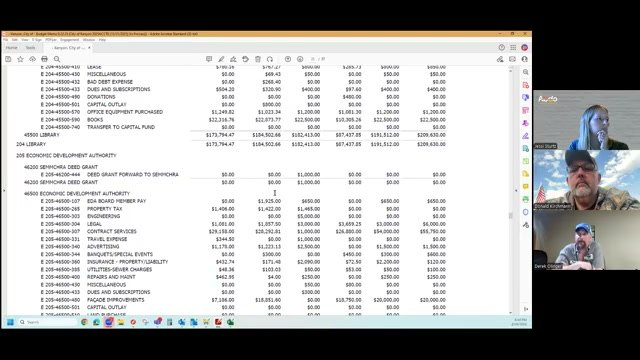
Two weeks after the Leader printed his quote, Lehner "clarified" it. The levy still opened at 27 percent.
On August 12 the administrator told the Kenyon Leader the finance work was "way over the top" for staff. On August 26 he opened the budget work session by clarifying that staff "is capable of covering the finance director's duties." The draft levy on the table that night was up 27.06 percent.
Lehner's own math: Abdo $200,000, a finance director $130,000. He picked Abdo.
When the council approved Abdo's finance and HR contract on August 12, 2025, the administrator gave the newspaper his own comparison: about $200,000 for the firm, about $130,000 for a full-time finance director. He recommended the firm. Eleven months later he called the same comparison "a wash."
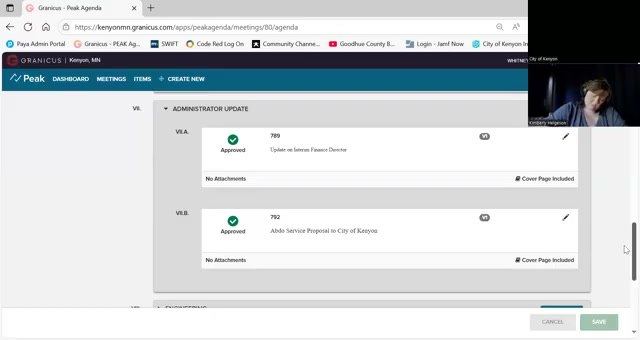
Payroll goes to a vendor and the administrator gets a raise, backdated, on the same consent agenda.
On July 8, 2025 the council approved the administrator's six-month evaluation and a pay-grade increase retroactive to June 14 by one consent motion, no discussion, and in the same meeting handed the city's payroll to an outside firm because the finance director was gone. Lawful and routine. The timing is the story.
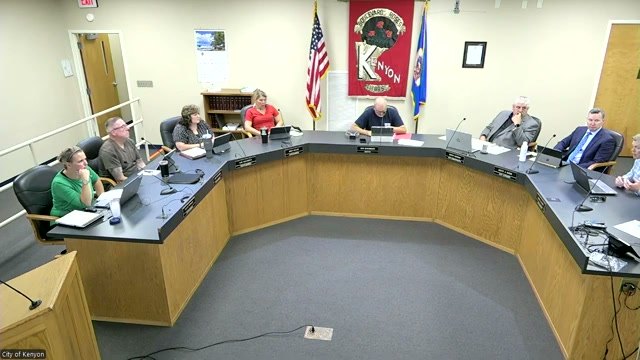
Kyllo tried to take her resignation back. The council handed her letter to the boss she was leaving.
Finance Director Whitney Kyllo resigned on June 10, 2025, then asked to withdraw it. The council accepted the resignation and sent her withdrawal to the administrator and the personnel committee "if needed." Three weeks later a public works director who resigned by email got a resolution keeping him.
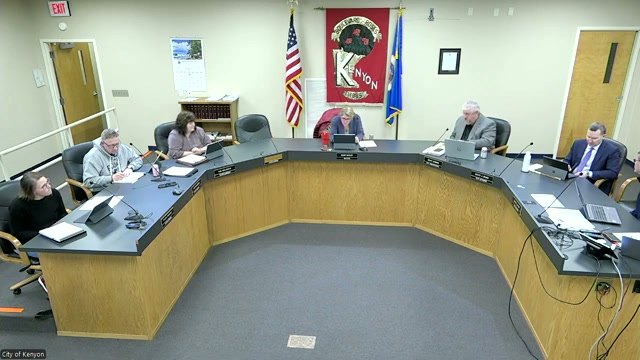
Month four, first purchase of note: $2,500 of spray foam so no one can hear the administrator's office.
Four months into the job, the administrator's first purchase of note was $2,500 of spray foam for the walls of his own office and the conference room. The council approved it 4-0 in the same meeting that ended a taco truck's lease over "perception."
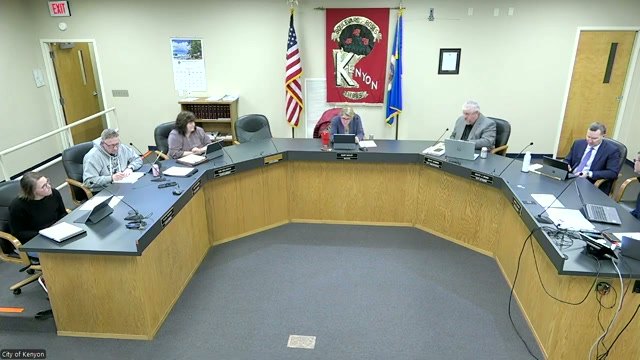
Lehner evicted the taco truck for "perception." The owners found out from the newspaper.
In March 2025 the Kenyon City Council ended a food truck's site agreement on the administrator's recommendation, citing how it might look. The owners had paid their bills and their annual fee. They learned they were out from the newspaper. A month later the administrator apologized and the council reversed itself.
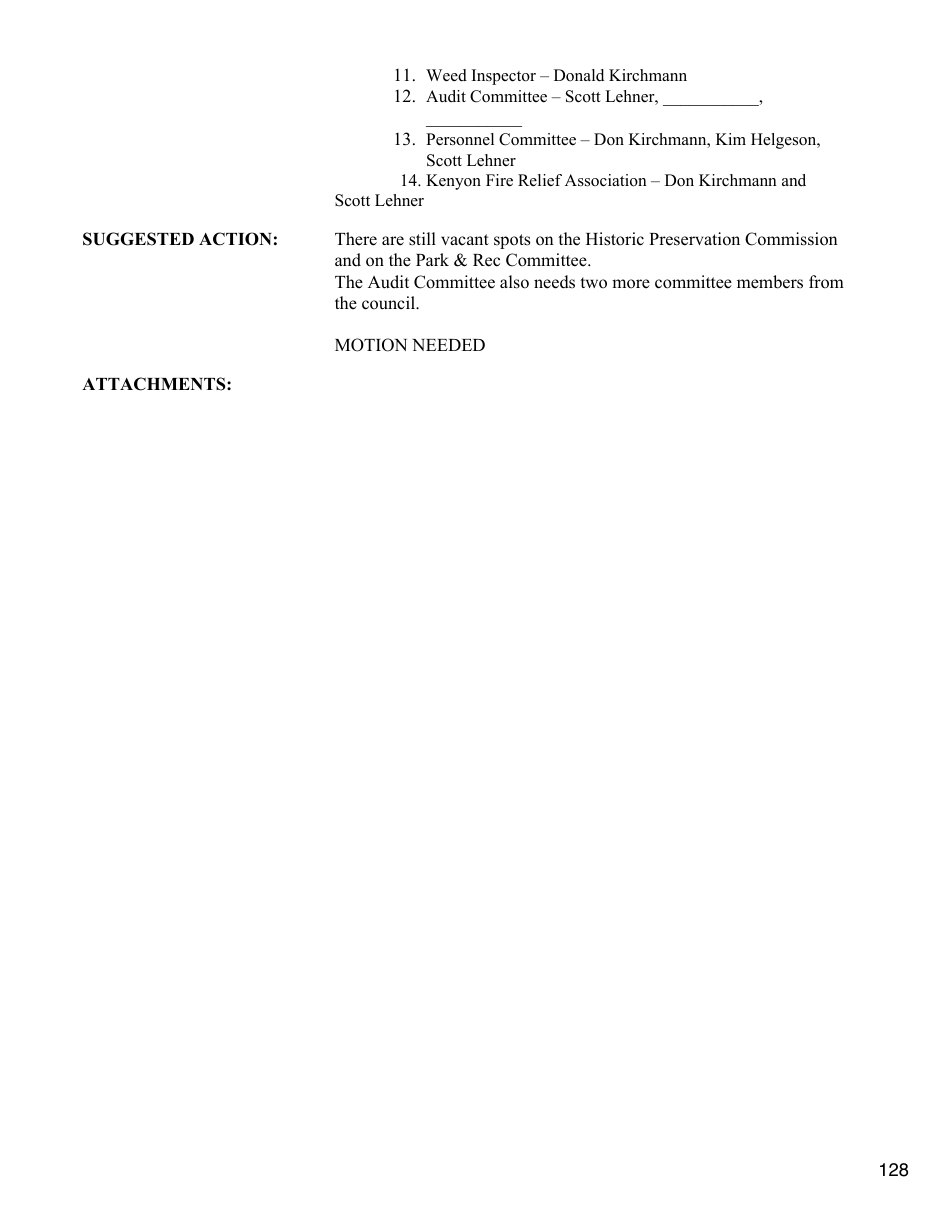
Staff asked the council to fill two audit seats. The council deleted the committee instead.
The January 14, 2025 packet told the council, in its suggested action, that "the Audit Committee also needs two more committee members from the council." The council read that line, heard the mayor and the administrator, and voted 5-0 to remove the committee instead.
Kirchmann, Bailey and Brunner abolished the audit committee on one man's say-so. That man was the one being audited.
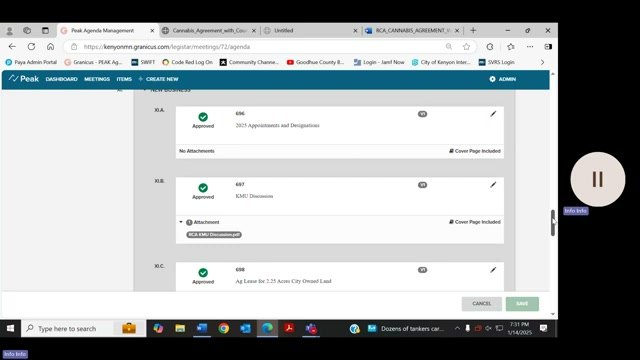
On January 14, 2025, in the city administrator's first regular meeting, Kenyon's council voted 5-0 to approve its annual appointments "eliminating the audit committee." The mayor said he had discussed it with Scott. Scott said "I could go either way." The committee's only listed member that year was the administrator himself.
Lehner called the KMU superintendent a records-hoarder to his face. Four minutes later he was apologizing.
At 1:03:18 on the January 14, 2025 recording, the city administrator told the council he had heard the utility superintendent say he alone held the key to KMU's files. The superintendent said it was a lie. By 1:05:06 the administrator had apologized. In between, the finance director said she had asked for that key and been refused.
The KMU "violations" report was ghostwritten by the outgoing interim. It names no law, because there isn't one.
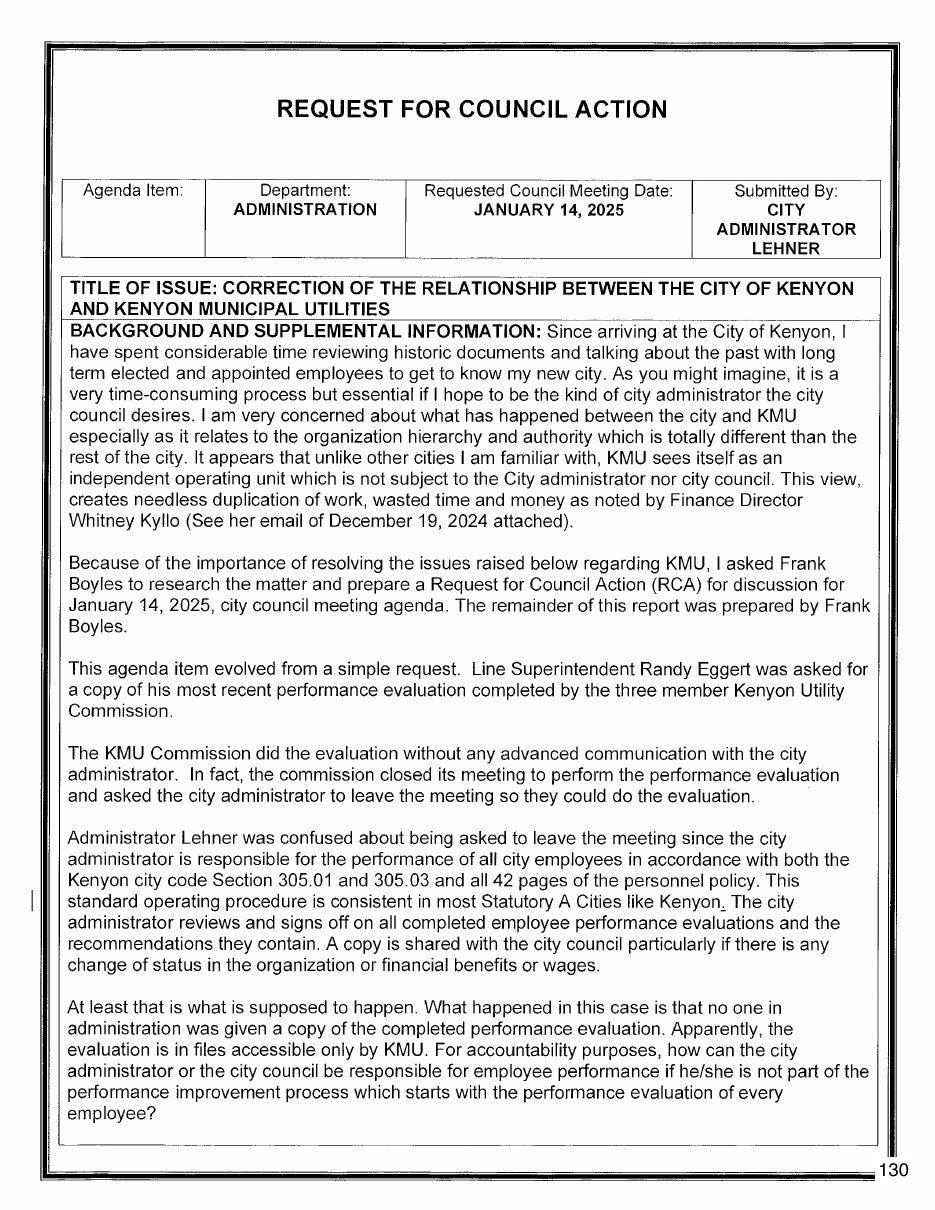
The report that called Kenyon Municipal Utilities' practices "violations" went to the council over the city administrator's name. Its first page says the outgoing interim administrator wrote the rest of it. Neither man cited a statute, because the statute runs the other way.
Week four: Lehner asks the council to hand him a utility that only a referendum can hand over.
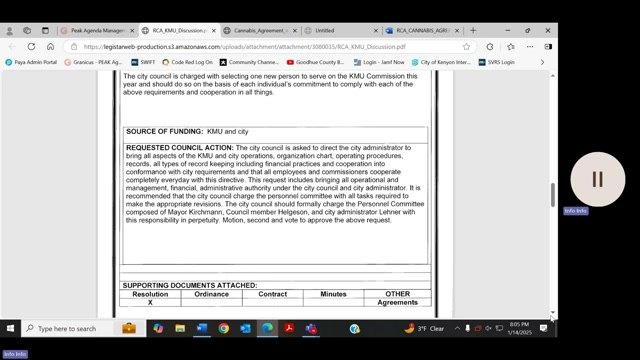
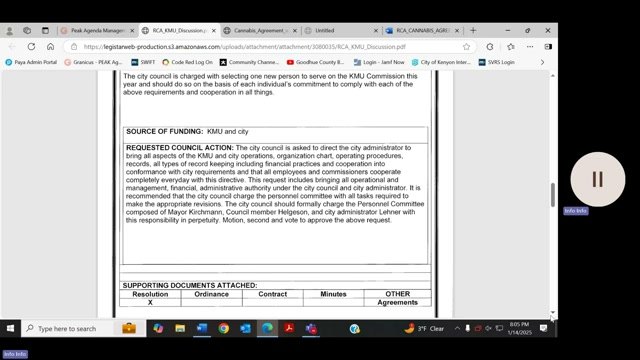
Four weeks after starting, Scott Lehner asked the Kenyon City Council to place all operational, financial and administrative authority over the municipal utility under himself and the personnel committee, "in perpetuity." Minnesota Statute 412.391 says that decision belongs to the voters, by petition and ballot.
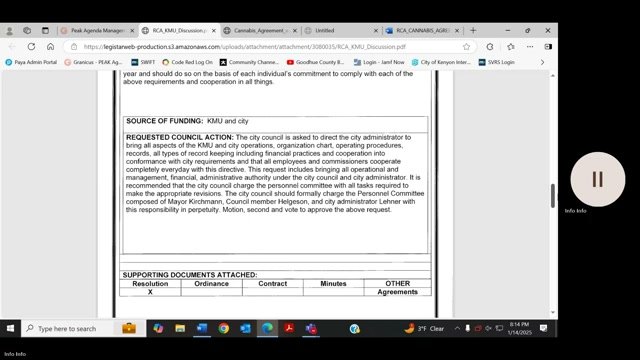
Three days on the payroll, Lehner walked into a closed KMU meeting. They walked him out.
Scott Lehner went on Kenyon's payroll December 14, 2024. On December 17 he sat down in a Kenyon Municipal Utilities meeting, the commission closed the session to evaluate its superintendent, and he was asked to leave. Four weeks later that exit was the first grievance in a report calling the utility's practices "violations."
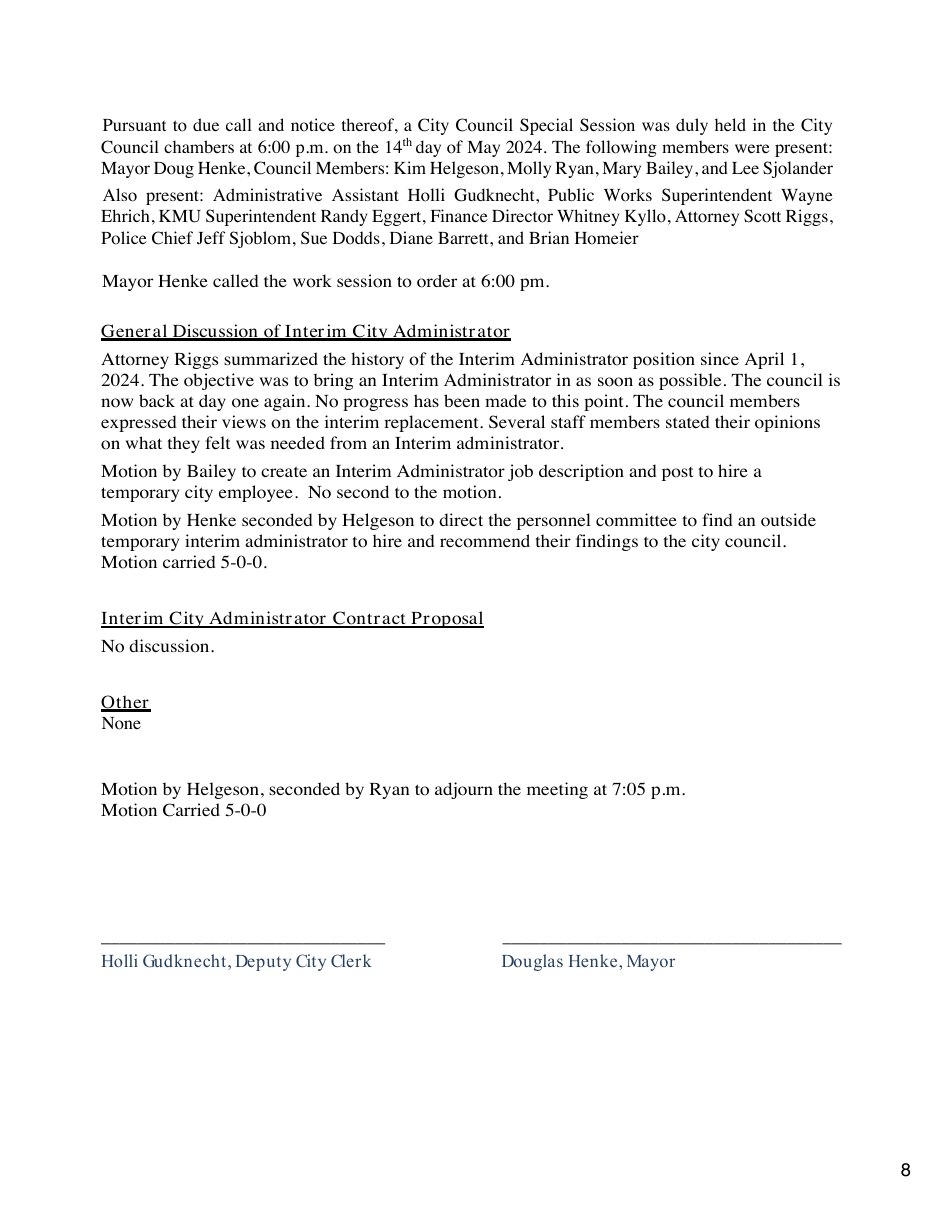
Kenyon could have hired its own interim administrator for the price of a job description. Nobody seconded.
In May 2024 a council member moved to write a job description and hire a temporary administrator from inside the city. The motion died without a second. The council hired an outside contractor instead, and eight months later hired his replacement.
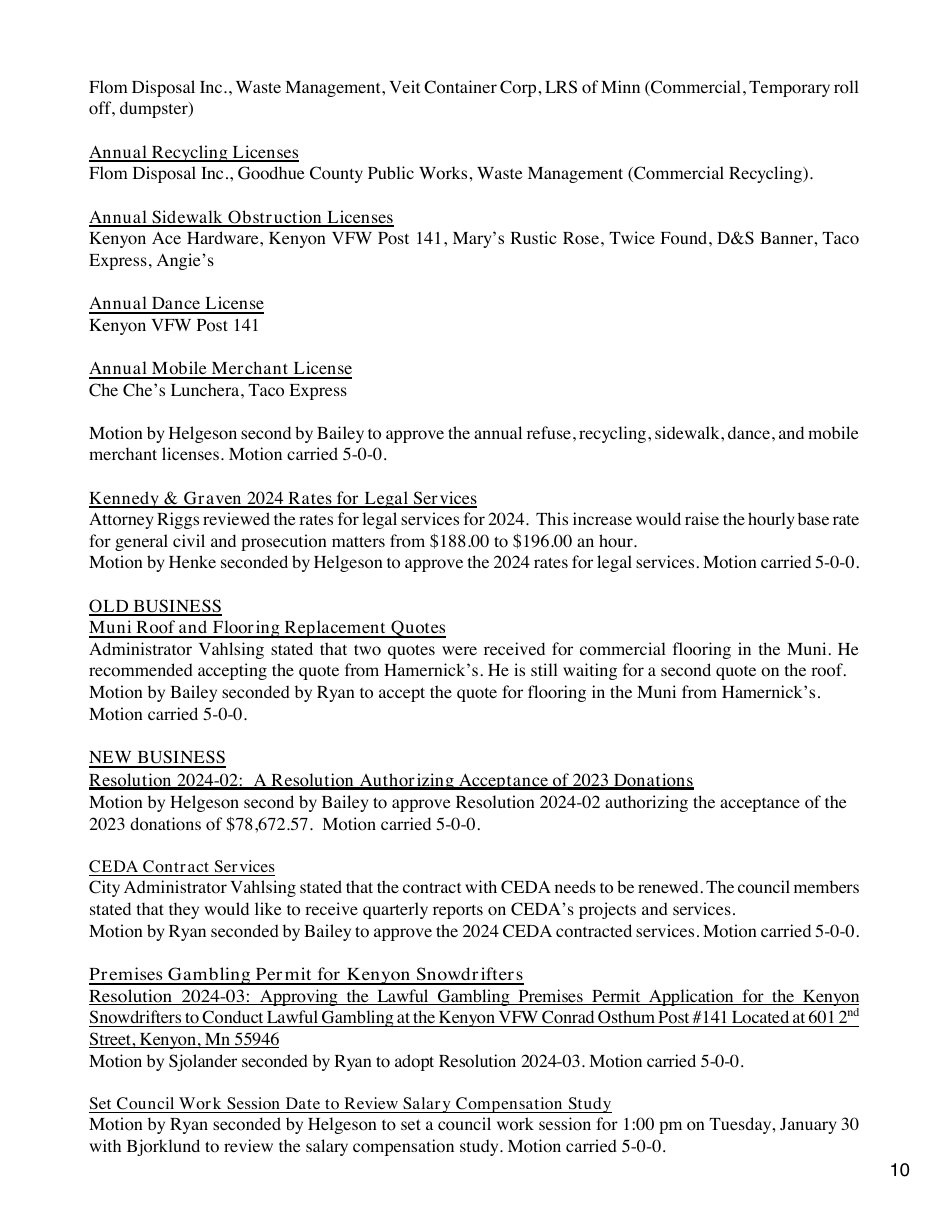
The council told CEDA to report every quarter. CEDA has skipped eleven quarters and kept the contract.
On January 9, 2024, the council renewed its economic development contract and asked, on the record, for quarterly reports. The contract has been renewed twice since and grown by a day a week. No report has appeared in any packet.
Companion pieces: the open letter and every packet and recording since 2019.