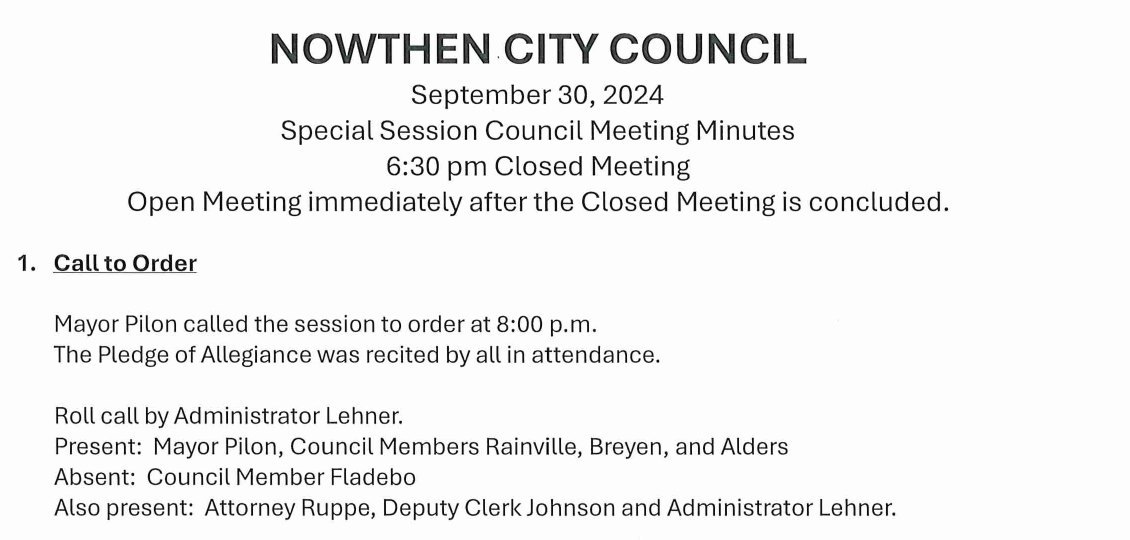
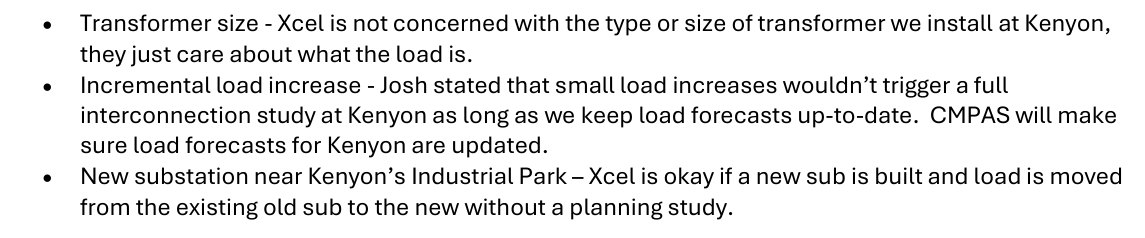
Kenyon Pays $7,352 a Year to Post PDFs
With a simple website, a few YouTube videos, and Claude, you can change the course of a city in less than a day.

There are 19,467 incorporated cities and towns in America, so roughly 19,467 city councils exist.
In October 2026, we checked the website of every one of them. 14,081 have a working website. 4,278 have no website at all, and another 543 have only a Facebook page.1
42% of these city websites run on government website vendors like CivicPlus, Revize, Catalis/GovOffice, or Granicus. Add the site builders like Wix, GoDaddy, and Squarespace, and 57% of city websites run on platforms owned by companies outside the city.
| Platform | Cities | |
|---|---|---|
| WordPress | 3,073 | |
| CivicPlus | 2,827 | |
| Revize | 925 | |
| Wix | 679 | |
| Municipal Impact | 558 | |
| GoDaddy Website Builder | 441 | |
| Catalis / GovOffice | 431 | |
| Squarespace | 365 | |
| Granicus govAccess | 247 |
City websites are arguably some of the easiest and simplest websites to serve to the internet.
Almost every city website is, at heart, a simple static website.
These websites serve simple files like text and documents.
The text is often just words or numbers.
The documents are often just agendas, minutes, or rules and regulations. 37% of city homepages link straight to PDF files.2
Video is almost always served through YouTube, and 26% of city homepages link to it directly.
Nothing about a city website requires advanced technology.
And nothing a city needs to serve to the internet is confidential, private, or needs to be gatekept. Only 3% of city homepages even have a login box.
The technology required to serve these types of websites is minimal, by nature.
It is extremely cheap and easy to serve this data.
What the law actually requires
So what does the law actually require of a city website?
Not much.
No law requires a city to have a website at all. No license or certification is required to build or run one.
Once a city has a website, here is the full list of requirements for a Minnesota city, federal and state law combined:3
- Make it accessible. Pages and PDFs must meet the WCAG 2.1 AA standard by April 26, 2028, for cities under 50,000 people.
- Post only public data. Staff pages list name, title, salary, and work contact, and nothing more.
- Tell visitors about cookies, and let the site work for people who refuse them.
- Put a short privacy notice on any form that asks for personal information.
- No campaign links, and credit the office, not the person.
- If comments are open, moderate them with a written, content-neutral policy.
- Use photos and fonts the city has the right to use.
- Keep pages and form submissions under the city's records retention schedule.
- If the site is hacked, report it to the state within 72 hours.
- Use a hosted payment page for anything involving a credit card.
That's it.
The website isn't even the legal record. In Minnesota, official notices, ordinances, and council proceedings must still run in the newspaper or on the posted bulletin board. The website is an extra copy.
Every item on that list is a checkbox, not a technology.
Accessibility is clean HTML, alt text on images, readable colors, and PDFs saved with tags. Free checkers like WAVE and Google Lighthouse flag what's missing in seconds.
A cookie notice and a privacy notice are a few sentences of text.
The .gov domain is free from the federal government.
Hosting a site of agendas, minutes, and PDFs costs a few dollars a month, or nothing at all on GitHub Pages or Cloudflare Pages.
The payment page comes from the payment processor, so the city never touches a card number.
A person who can follow a YouTube tutorial and ask Claude a question can meet every one of these requirements in less than an hour.
Nothing on the list requires a vendor. Nothing on the list requires a contract with a company owned by private equity. And nothing on the list costs thousands of dollars a year.
What it should actually cost
So what should a city website cost?
Start with what it costs to run. A small town's site of pages and PDFs, hosted on a mainstream cloud service, costs a few dollars a month in hosting, and nothing at all on a free static host. The .gov domain is free. The accessibility checkers are free.4
The real cost is a person's time: posting the agenda, uploading the minutes, fixing a page. For a town of 2,000 people, that is a couple of hours a month.
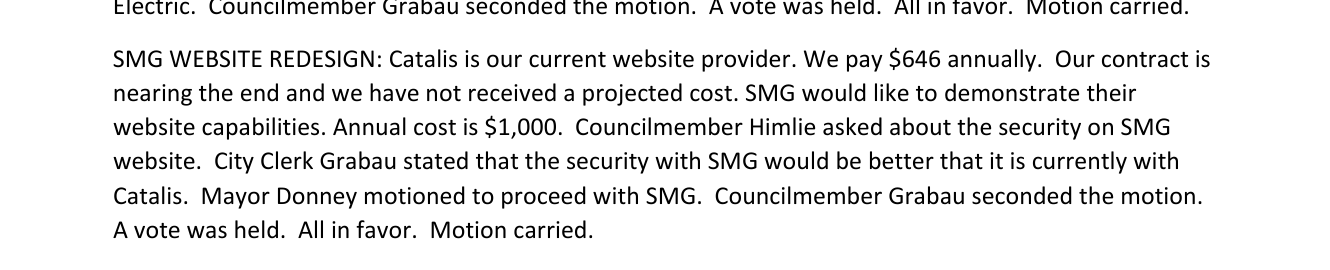
The market has already priced it. In 2023, Harmony, Minnesota, a city of about 1,000 people, hired a small firm in nearby Preston for $1,000 a year, covering hosting, design, an accessible theme, unlimited updates, training, and security, with the city owning its files. Municipal Impact lists its city websites at $812 to $1,514 a year, depending on size.5
A fair price for a small town, all in, is somewhere between $500 and $1,500 a year. Less if the town does it itself.
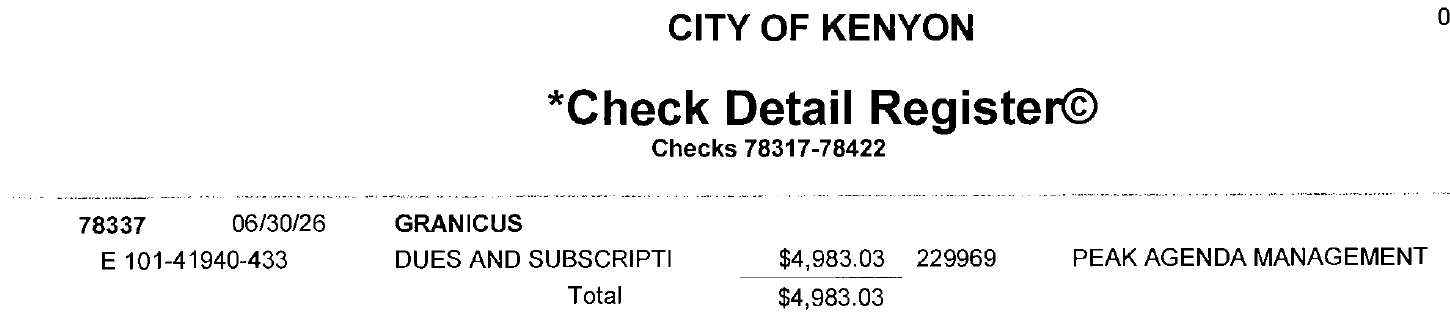
Compare that with Kenyon, Minnesota, a city of 1,900 we will come back to. Kenyon pays $2,369 a year for a website template its own Library Director filled in, and another $4,983 for agenda software that posts PDFs.
Where does the difference go? Look at the vendors' own numbers.
Granicus earns about $175 million a year before interest, taxes, depreciation, and amortization (EBITDA). Data providers estimate its revenue at about $420 million, which is consistent with its roughly 2,000 employees. That puts about 42 cents of every dollar a city pays into profit before those costs. For comparison, Tyler Technologies, the largest public government-software company and the only one whose books are audited in public, reported a 46.5% gross margin and a 15.3% operating margin for 2025.6
Then comes the multiplier. Granicus's owners, Vista Equity and Harvest Partners, sought more than 20 times EBITDA for the company, about $4 billion. At that price, every dollar of profit a city pays each year is worth more than $20 to the owners when they sell.
Run Kenyon through that math. At a 42% margin, Kenyon's $4,983 Granicus bill carries about $2,100 a year of profit. At 23 times, that is about $48,000 of sale value, built from one city of 1,900 people paying to post its agendas.
That is the business. It isn't selling technology. It is buying recurring city budgets and selling them to the next owner at twenty times.
The vendors already use AI
Here is the part that should make every council member stop.
The companies selling cities their websites already use AI to do the work.
CivicPlus, the biggest government website vendor in America, announced six AI products in January 2026 under the name CivicPlus Intelligence. An AI Editing Assistant writes, rewrites, and summarizes city web pages. An AI Content Advisor audits them. Another AI tool edits agendas and minutes. An AI agent answers residents' questions. The AI Editing Assistant comes at no additional cost.7
Granicus, which charges Kenyon $4,983 a year, announced generative AI assistants for "task automation, content suggestions, and summaries," plus a digital assistant for residents, back in January 2025.
And every major site builder now builds the website itself with AI:
Catalis, Kenyon's own website vendor, hasn't even announced that much. Kenyon pays it $2,369 a year for a template the city's own staff filled in.
So the vendors aren't selling cities something cities can't get. They are reselling the same AI any city clerk can use for about $20 a month, wrapped in a contract that goes up every year.
The AI is the cheap part. The contract is the expensive part.
These are aggressive companies, backed by private equity and big finance, that ruthlessly sell their shitty technology to vulnerable and ignorant cities. CivicPlus has raised $290 million. Catalis was valued at more than $1 billion in 2021 and has made 30 acquisitions. Their private equity owners manage about $570 billion combined.8
These cities often do not understand that all of the technology they are being sold is actually free technology.
Any decent engineer knows that cities are getting the complete run-around.
When Dalton Gardens, Idaho, pushed back on a $2,988 Catalis renewal in 2025, the price dropped to $1,200. Granicus's standard contract lets it "adjust pricing at any renewal."9
And almost all consumers realize they are forced to use and experience shitty technology that is extremely expensive.
In almost every one of the 19,467 cities in America, there is at least one agency and/or technical person who understands the basics required for the city to run its own technology.
There are certainly many kids in each city who could run circles around almost all government officials in technical ability.
Yet in more than half of all cities with a website, government officials continually outsource their technology to large, non-local corporations that are backed by the largest private equity and financial institutions in the world.
We are talking about millions of dollars being sent away from cities each year. Minnesota's 856 cities alone pay website vendors about $2.91 million a year, and 86 cents of every dollar leaves the state.10
Worse, we are talking about cities giving up complete agency to external sources for a shitty product that doesn't adequately serve the people or the cities.
This bleeds into all facets of society.
Slow and poor data reporting.
Slow decisions.
Disempowered people and government officials.
Money leaving cities instead of growing within a city.
Let's take, for example, a small city in Minnesota: Kenyon.
Kenyon is a beautiful city of about 1,900 people on the North Fork of the Zumbro River in Goodhue County, platted in 1856 and surrounded by some of the finest farmland in America. The Chicago Great Western Railway laid track through town in 1885, its old depot still stands in Depot Park, and every August the town fills up for Rose Fest.

It is a short drive from several world-class institutions, like the Mayo Clinic and Shattuck-St. Mary's.
Not to mention the world-class companies and people within Kenyon, like Plymold, a 100% employee-owned company that has built restaurant and commercial furniture in Kenyon for more than 75 years, and the Central Farm Service cooperative, which runs Kenyon's grain, agronomy, and energy operations.11
In April 2021, Kenyon's own Library Director rebuilt the city website using the GovOffice tool the city was already paying for. The council minutes say it plainly: "There is no additional cost to the City for this update."12

Yet Kenyon keeps paying for the template: $2,235 to Catalis in 2025 and $2,369 in 2026. Its Granicus agenda software went from $3,300 a year in 2021 to $4,983 in 2026, up 51%, while its 47 council recordings sit on YouTube for free.13



Keep the money in town
That $7,352 a year leaves Minnesota. Granicus is based in Denver. Catalis is based in Alpharetta, Georgia. It doesn't have to.
Within about 40 miles of Kenyon, there are web design firms that already build and run websites for the businesses, churches, and nonprofits of Faribault, Northfield, Red Wing, Owatonna, and Rochester. Any one of them could build and run a city website of agendas, minutes, and PDFs:14
| Firm | Town | Local sites found |
|---|---|---|
| Priority Web Design | Faribault | 70 |
| Sievers Creative | Red Wing | 29 |
| Hatcher Digital | Northfield | 15 |
| Med City Creative | Pine Island | 11 |
| Woodruff | Red Wing | 9 |
| Faribault Web | Faribault | 7 |
| Mineral Springs Marketing | Owatonna | 7 |
| Farmhouse Marketing | Northfield | 6 |
| NexGen Marketing | Rochester | 6 |
| Beau Brewer Digital | Red Wing | 4 |
| Neighborly Creative | Rochester | 4 |
| Westbrack Marketing | Owatonna | 4 |
| Web Bro Hosting & Design | Northfield | 2 |
| WP CodeUs | Rochester | 2 |
Their published prices tell the same story as Harmony's. Faribault Web's care plans run $100 to $320 a month. Hatcher Digital's start at $199 a month. And SMG Web Design in Preston already runs Minnesota city websites, for $1,000 a year.
Every dollar paid to one of these firms stays in southern Minnesota. It pays a neighbor, who spends it at the same hardware store, the same diner, and the same Rose Fest.
Or keep it even closer.
Kenyon-Wanamingo Schools already proves the model. Its construction students are building two picnic shelters in Kenyon's Depot Park, paid for by a $10,000 Southern Minnesota Initiative Foundation grant.15
If students can build the park shelters, they can build the city website.
Every city should have a school program where students run the city's technology. A teacher oversees it. Students post the agendas, upload the minutes, fix the PDFs, and keep the site accessible. They graduate with a real portfolio, a real reference, and a real public service on their record. The city pays the school instead of a private equity firm.
A few towns have tried it once. In 2004, an Ironton, Ohio high school class built the city's website; Ironton runs on WordPress today. In 2025, Medicine Bow, Wyoming voted to have local students build its site; it runs on Duda, a commercial site builder, today. As far as we can find, no city in America runs it as a standing program. That should change.
Much of the problem with cities is that they are run by people who are objectively older and do not have the technical knowledge to be making technical decisions.
Whether you like it or not, everything runs on AI.
If you're not aggressively adopting AI and the incredible capabilities of software today, you will be left behind, and we are seeing this all around the world in aging populations unwilling to adopt or delegate.
One of the more disturbing factors is people in power simply ignoring and not replying to technical help.
Any development agency or engineer knows this pain all too well.
The people in power are often the least likely to quickly adopt new technologies, despite the orders-of-magnitude efficiencies to be gained.
Let me repeat this to be uber clear: the people in power are actively refusing to adopt technology that would help lower taxes, make more money for everyone, and increase efficiency at every level, all because they don't understand it and they struggle with the idea of delegating power.
AI is far more accurate, consistent, and harder working than any city council official in America.
The percentage of government officials who can outperform the quality and consistency of AI is less than 0.001%.
In 100 years, people will look back at these times and ask: How could those in power have been so obtuse?
Let's repeat that: How can those in power be so obtuse?
Have you seen The Shawshank Redemption? Andy Dufresne tells the corrupt warden that there is an easy way to prove his innocence through simple record checking, and the warden completely dismisses him.
In absolute disgust, Andy says, "How can you be so obtuse?"

Enraged that Andy would question him and even bring up his corruption, the warden throws Andy in the hole, solitary confinement, for weeks.

It is a perfect analogy for everyone in power who isn't aggressively adopting technology and employing and empowering the technically talented.
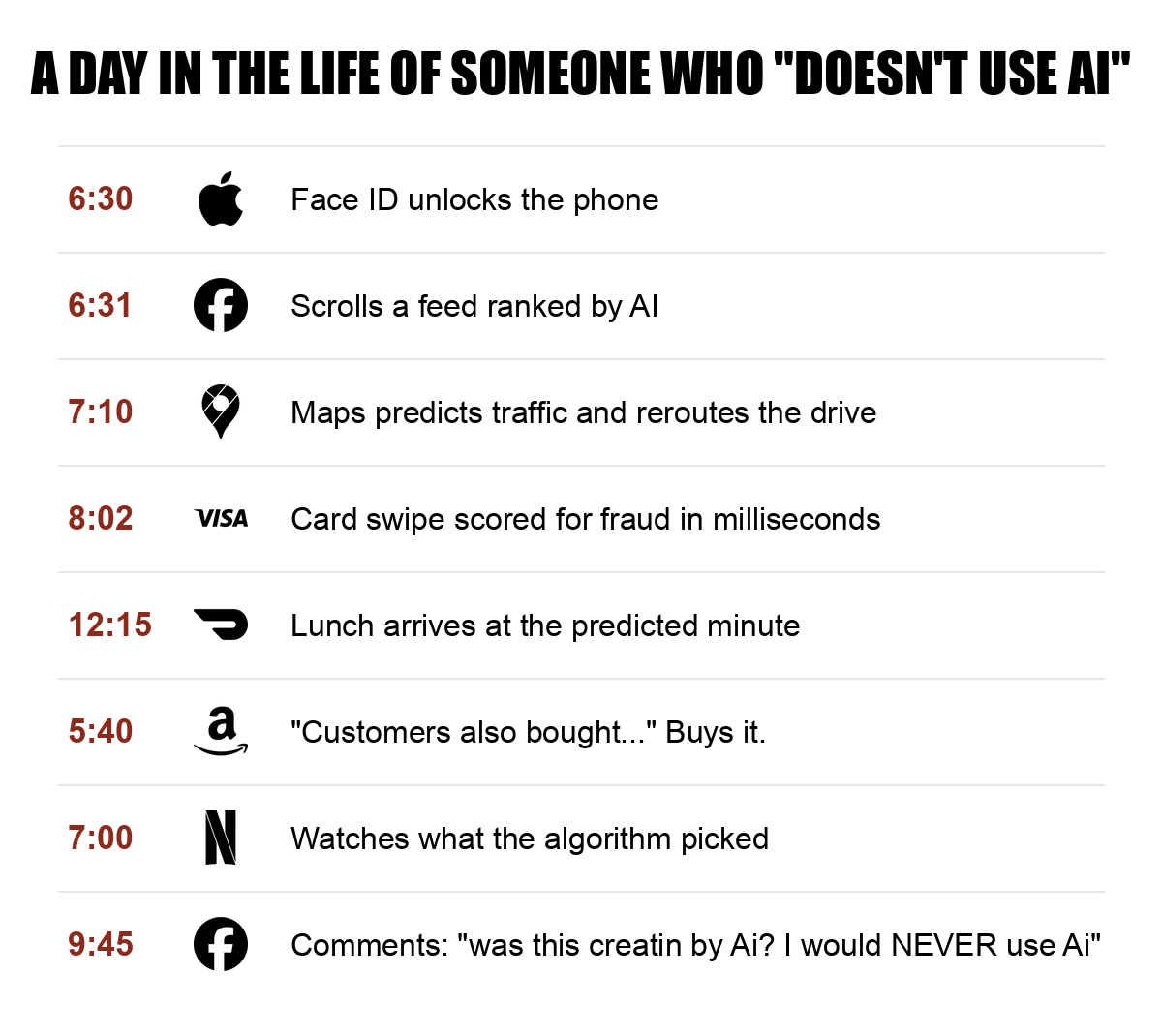
In 2026, it is impossible not to use AI. Even if you think you're not using it, the companies you engage with every day are using AI.
This should be celebrated and leaned into. Software doesn't make mistakes the way humans do. It is objective, it isn't temperamental, and it can see patterns that our human minds can't conceive of.
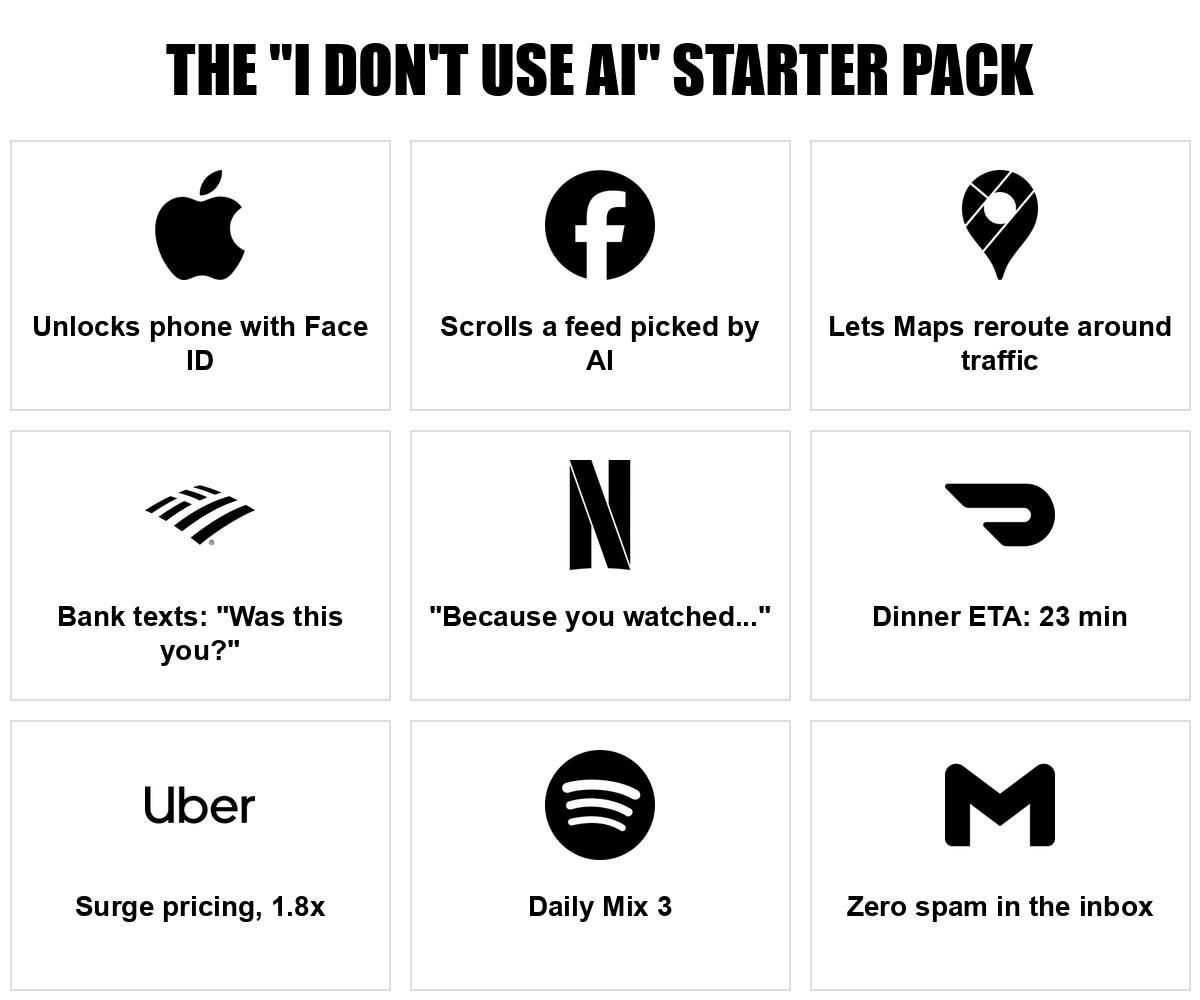
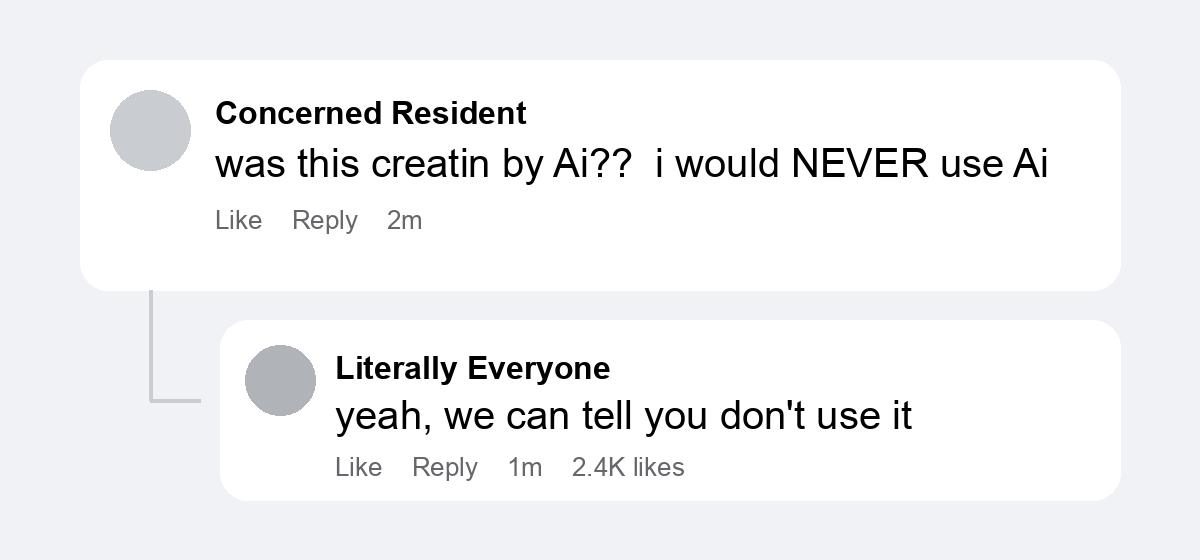
And still, despite AI's incredible effectiveness, you have people who can't even type one sentence without making a mistake asking, "was this creatin by Ai?"
And despite what many boomers believe, they are using AI every day regardless. Everything you touch is run by AI today (except city websites).
Sources
- All 19,467 active incorporated places in the 2024 Census Gazetteer (census-designated places and Puerto Rico excluded). Websites came from the CISA .gov registry, Wikidata, and web search, and each homepage was fingerprinted for its platform in October 2026. Another 552 known sites were unreachable, and 13 domains had lapsed and been taken over by spam or parking pages.
- Share of about 14,000 fetched city homepages containing a link to a .pdf file, to youtube.com or youtu.be, or a password field. Homepages only; inner pages were not counted.
- Federal: 28 CFR Part 35 Subpart H (ADA Title II web rule, WCAG 2.1 AA; compliance dates as extended April 20, 2026); First Amendment public-forum doctrine (Lindke v. Freed, 601 U.S. 187 (2024)); Copyright Act; PCI DSS v4.0.1 (card-network contracts); DOTGOV Act of 2020 (.gov at no cost). Minnesota: Minn. Stat. §§ 13.03, 13.43, 13.601 (public data), 13.15 (cookies), 13.04 subd. 2 (Tennessen warning), 10.60 (website content), 15.17 and 138.17 (records), 16E.36 (72-hour incident reporting); newspaper and posting duties under §§ 13D.04, 331A.03, 412.191. No federal or Minnesota statute requires a city to have a website. Checked against official texts September 13, 2026.
- Hosting estimate is ours, from published pay-as-you-go pricing for object storage and content delivery at small-town traffic levels; GitHub Pages and Cloudflare Pages host static sites at no charge. The .gov domain is free to U.S. government entities under the DOTGOV Act of 2020. WAVE (WebAIM) and Google Lighthouse are free accessibility checkers.
- City of Harmony, Minnesota: SMG Web Design proposal, August 2023, and council minutes, October 10, 2023 ("Catalis is our current website provider. We pay $646 annually."). Municipal Impact published price list by population tier, plus $549 to $699 setup.
- Granicus EBITDA, valuation, and owners: Reuters, March 6, 2025, "Granicus' owners explore $4 billion sale of software maker, sources say." Granicus is private and does not publish revenue; $420.1 million is the ZoomInfo estimate, and other aggregators range from $100 million to $210 million, which would imply an even higher margin. Employee count from Reuters. Tyler Technologies FY2025 results as reported from its SEC filings; gross margin 46.5%, operating margin 15.3%, on about $2.3 billion of revenue.
- CivicPlus, "CivicPlus announces AI capabilities with six new intelligent product releases," January 29, 2026, and Municipal Websites Central release notes, December 13, 2025 (AI Editing Assistant at no additional cost); Granicus, "Granicus' 2025 Semiannual Update features AI innovation," GlobeNewswire, January 27, 2025; Wix, Squarespace (Blueprint AI), GoDaddy (Airo), and WordPress.com (Jetpack AI Assistant) product pages. No AI product announcement from Catalis was found as of October 2026. Consumer AI plans such as ChatGPT Plus and Claude Pro list at about $20 a month.
- CivicPlus funding and Granicus EBITDA from public company profiles and press reports (PitchBook, Reuters); Catalis valuation (2021) and acquisition count from Tracxn. Assets under management are from each owner's most recent public disclosure, 2025–2026.
- City of Dalton Gardens, Idaho: July 30, 2025 council packet, pp. 38–39. Granicus order form and Master Subscription Agreement: Kenyon council packet, May 11, 2021, pp. 34–49.
- Statewide model of annual recurring website vendor spend for all 856 Minnesota cities, 2026 dollars: base $2.91M, range $1.90M to $4.97M, built from per-city platform fingerprints and vendor prices found in city claims lists, budgets, and published price lists.
- Plymold, a division of Foldcraft Co., 615 Centennial Drive, Kenyon: "100% employee-owned," per plymold.com (2025); Foldcraft listed about 230 employees and $46 million in annual sales in the Woodworking Network FDMC 300 (2019). Central Farm Service (cfscoop.com) operates grain, agronomy, and Cenex energy locations in Kenyon.
- Kenyon City Council minutes, April 13, 2021, "Update on city Web Site."
- Kenyon check register: check 77327, July 31, 2025, Catalis LLC, $2,235.00, "Website management Jan–Dec 2025"; check 77777, January 6, 2026, Catalis LLC, $2,369.00, "Website subscription Jan–Dec 2026"; Granicus order Q-125634, April 26, 2021, $3,300 year one; check 78337, June 30, 2026, Granicus, $4,983.03, "Peak Agenda Management."
- Firms and counts from a September 2026 crawl of website footer credits ("website by," "designed by") and agency portfolios across Kenyon, Faribault, Northfield, Owatonna, Red Wing, Cannon Falls, and Rochester; counts are the client sites we could attribute, not each firm's full client list. Prices from each firm's published pricing pages, September 2026. SMG Web Design: Harmony, Minnesota proposal, August 2023, and Canton, Minnesota claims, 2022 to 2024.
- Southern Minnesota Initiative Foundation Small Town Grant, fall 2025, $10,000 for two picnic shelters at Depot Park, built by Kenyon-Wanamingo Schools construction students; Kenyon Depot Park committee and EDA records.
- From each company's own product announcements and documentation: Bank of America (Erica, 2018), Chase and Visa (AI fraud and risk scoring on transactions), Wells Fargo (Fargo, 2023), Mastercard (Decision Intelligence), Meta (feed ranking and Meta AI), TikTok (For You recommendations), YouTube (recommendations), X (Grok), Google (AI Overviews, 2024; Gmail machine-learning spam filtering), Google Maps (traffic prediction with DeepMind, 2020), Waze, Tesla (Autopilot), Uber (pricing and ETAs), Apple (Face ID, Apple Intelligence, 2024), Samsung (Galaxy AI, 2024), Netflix (recommendations), Spotify (AI DJ, 2023), Amazon (recommendations; Rufus, 2024), Walmart (AI shopping assistant), Starbucks (Deep Brew), DoorDash and Uber Eats (delivery-time prediction), Delta (AI-assisted fare pricing with Fetcherr, disclosed July 2025).